
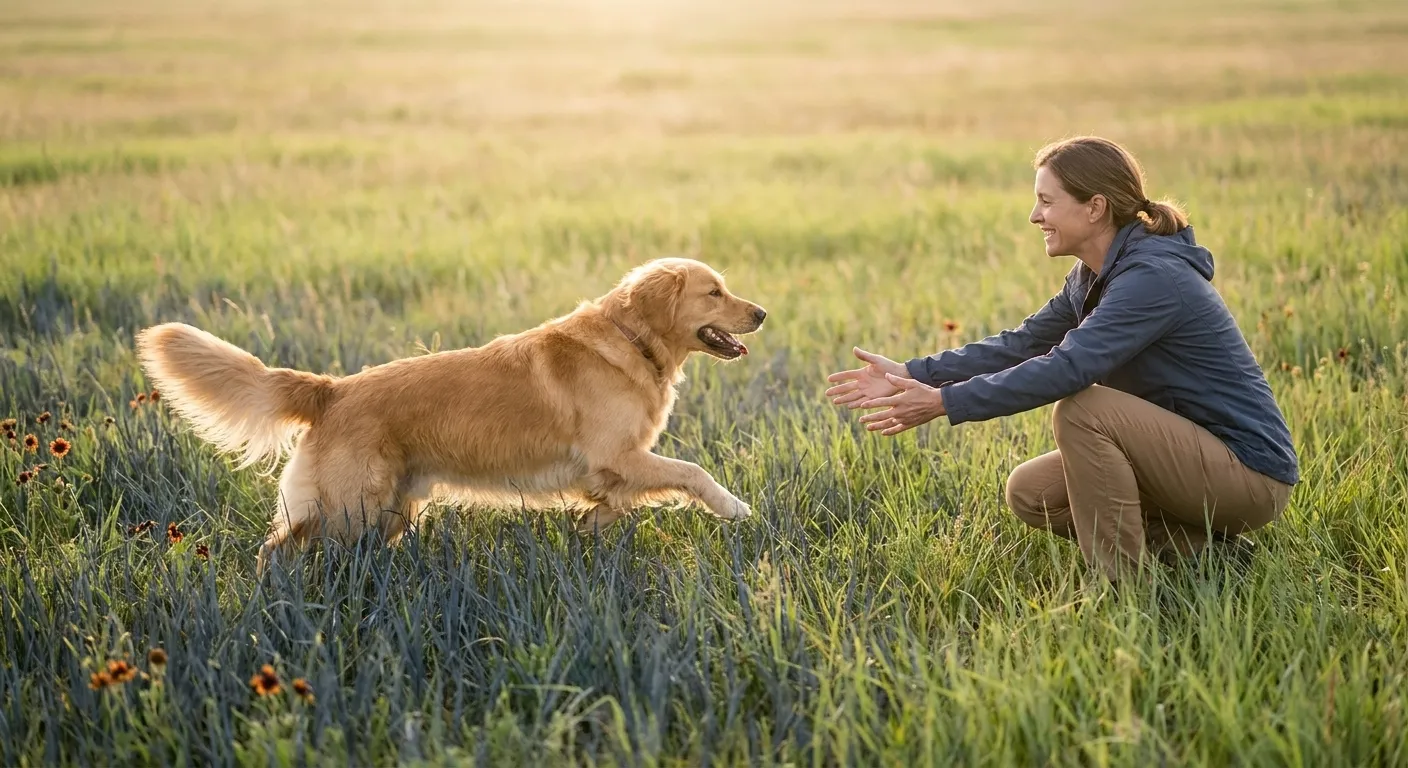
A strong, consistent recall is one of the most vital commands you can teach your retriever. It’s not just about convenience; it’s a critical safety command that can prevent your dog from running into dangerous situations. Building a retriever reliable recall takes patience, consistency, and positive reinforcement, but the effort is well worth it for the peace of mind it provides. A dog that comes back every time you call is a truly liberated dog, enjoying off-leash adventures safely. Therefore, dedicating time to this training is invaluable for both you and your canine friend.
Many dog owners struggle with this fundamental command. However, with the right approach and understanding of your retriever’s natural instincts, you can achieve remarkable results. Our comprehensive guide will walk you through the essential steps, from foundational training to proofing in distracting environments. Consequently, your retriever will learn to prioritize your call over any enticing distraction.
Building a Solid Foundation for Retriever Reliable Recall
Start teaching recall in a low-distraction environment, such as your home or a fenced backyard. Use a happy, enthusiastic tone when you call your dog. When they come, immediately reward them with high-value treats and praise. The key is to make coming to you the most rewarding experience possible. Never use recall as a command to scold or punish your dog, as this will create negative associations. Practice frequently in short, fun sessions. Begin by calling your dog when they are already close to you, then gradually increase the distance. For instance, you might start by calling them from across the room. Moreover, always ensure these early sessions are positive and upbeat, building a strong desire in your dog to return.
As your dog grasps the concept, introduce a specific recall word or phrase. Many trainers prefer a unique word like “Come!” or “Here!” that is only used for recall, not for other commands. This helps prevent confusion. Always pair this command with positive reinforcement. Furthermore, consistency in your chosen word is crucial for clarity. Using a long line (a lightweight rope attached to their harness) in a secure, open area once you start practicing outdoors is highly recommended. This allows you to reinforce the command safely without the risk of your dog running off. Indeed, a long line provides a crucial safety net during early outdoor training.
Gradually increase the duration your dog is away from you before you call them. Initially, call them when they are just a few steps away. Then, let them wander a bit further before issuing the command. Remember to always reward generously when they return. This reinforces the idea that returning to you is always beneficial. Consequently, your dog will associate your call with positive outcomes, strengthening their desire to come back. Furthermore, varying the environment for these foundational exercises, even within your home, can be helpful.
The Importance of High-Value Rewards
For a truly reliable recall, your rewards must be irresistible. Standard kibble might not cut it, especially as distractions increase. Think about small pieces of cooked chicken, cheese, or specialized training treats. The higher the value of the reward, the stronger the motivation for your retriever to return. In addition to food, enthusiastic praise and a quick game with a favorite toy can also serve as powerful motivators. Therefore, experiment to discover what truly excites your dog. Remember, the reward should be immediate upon their return, every single time, to create a clear association. This immediate reinforcement is paramount for successful training.
Consider rotating your rewards to keep things exciting and unpredictable. If your dog always gets the same treat, it might become less appealing over time. Introducing new, exciting treats will maintain their enthusiasm for returning to you. Moreover, the anticipation of a varied reward can further enhance their responsiveness. For more ideas on engaging rewards, explore various interactive toys or even puzzle toys as part of your reward system.
Overcoming Distractions and Proofing Your Retriever Reliable Recall
As your retriever becomes more consistent, gradually introduce mild distractions. This could be another person in the yard, a toy, or gentle background noise. Practice in different locations, always starting with a long line until you are confident in their response. Increase the value of your rewards as distractions increase; what works inside might not be compelling enough at the park. For example, a squeaky toy might be a great reward indoors, but a piece of hot dog might be necessary at a busy park. This progressive exposure to distractions is vital for proofing your dog’s training. Furthermore, always set your dog up for success by starting with manageable distractions and slowly increasing the challenge.
When introducing new environments, always revert to using your long line. This provides a safety net and allows you to guide your dog back if they get too distracted. Practice in parks, open fields, and even urban settings once your dog is proficient in less stimulating areas. The goal is for your dog to respond to your call regardless of what is happening around them. Moreover, consistency across all environments is key to building a truly robust recall. Gradually, you can reduce reliance on the long line as their response becomes more reliable. Indeed, a well-proofed recall is a hallmark of a well-trained dog.
Consider enrolling in a local obedience class that focuses on recall in a group setting. This provides a controlled environment with various distractions, allowing your dog to practice coming back amidst other dogs and people. The guidance of a professional trainer can also be invaluable. Consequently, this structured environment can significantly accelerate your dog’s progress. Furthermore, observing other dogs and handlers can provide additional insights and motivation.
Common Mistakes to Avoid in Recall Training
- Chasing Your Dog: If your dog runs away, resist the urge to chase them. This often turns into a fun game for them and reinforces the behavior you want to avoid. Instead, try running in the opposite direction or hiding.
- Calling When You Know They Won’t Come: Only call your dog when you are reasonably sure they will respond. Every time they ignore your call, it weakens the command.
- Punishing Your Dog for Coming Back Slowly: Never scold or punish your dog when they eventually return, even if it took a long time. This teaches them that coming to you leads to negative consequences. Always celebrate their return.
- Overusing the Command: Don’t call your dog unnecessarily. Save your recall command for when you truly need them to come.
- Not Varying Training Locations: Sticking to one location means your dog only learns recall in that specific spot. Practice in many different places to generalize the command.
Avoiding these common pitfalls will significantly improve your chances of achieving a solid retriever reliable recall. Furthermore, being mindful of these errors will prevent undoing the hard work you’ve already put in. Therefore, always approach recall training with patience and positive intent.
Advanced Techniques for Enhancing Retriever Reliable Recall
Once your retriever has a strong foundation, you can introduce advanced techniques to further solidify their recall. One effective method is the