A Retriever Drop Cue asks your dog to release something they already hold. It is different from asking them to leave an object alone before picking it up. Begin with an easy toy and a voluntary trade in a quiet room. A stolen sock during the morning rush is a poor first lesson.
Dogs Trust’s fair-trade guidance recommends exchanging a toy for something the dog wants more, allowing the dog to choose the exchange and returning the toy during practice. The organisation distinguishes that from leave training. This guide provides a room setup, a toy record and example handovers so your household can practise one clear task.
By Retriever Dogs Guide Editorial. This is general training information, not veterinary advice. If your dog guards objects, freezes, growls or shows distress around people approaching possessions, stop and seek qualified behaviour help. Do not use this exercise to challenge guarding.
Choose an ordinary practice toy
Select a familiar toy your dog can hold comfortably and that you can inspect easily. Avoid starting with their most prized object. A toy reserved for an intense chase game may create a busier picture than you need. Put away other toys so you can tell which item is part of the current session.
Check the toy before bringing it out. Look for loose parts, a split seam or damage that means it should be removed from use. Follow its maker’s guidance on suitability. Do not use a household object just because the dog likes taking it. You want practice with an appropriate item, not a lesson built around something unsafe.
Write the toy’s description on the practice card. “Plain blue fabric toy from living-room box” is specific enough for another person to select it. “Use a toy” is not. If you later change the object, record that change so a new response is not mistaken for a change in the dog’s understanding.
Set up the Retriever Drop Cue space
Use an uncluttered area with room for the dog to move and for you to stand or sit without leaning over them. Close access to unrelated household items. Put shoes and laundry away before practice. That is practical management, and it avoids making the trade lesson compete with a room full of tempting possessions.
Keep other dogs out of the practice area. A second dog approaching a reward or toy adds a different interaction. Ask children to watch from elsewhere, or wait until they are occupied safely. The starting lesson should involve one handler, one dog and one item you can observe clearly.
Set a suitable reward in a container you can reach. Use something consistent with your dog’s existing needs and care plan. This article does not prescribe foods or portions. If the reward’s suitability is uncertain, resolve that before practising. Searching cupboards midway through a trade makes your own sequence difficult to repeat.
Rehearse your part before offering the toy
Decide where the exchanged toy will go and where the reward will be offered. You should not need to move quickly toward the dog’s mouth. Practise the sequence without the dog: put the toy down, place an imaginary reward to the side and step back. Check that your hands stay relaxed and your movements remain small.
Choose a clear ending for the interaction. You might put the toy back in its storage box once practice is over, then move on to another quiet activity. Have the box ready. If you leave the toy in your pocket and walk around the house, you have introduced a new situation without deciding how to handle it.
Brief a helper on the plan if one is present. They should not call the dog, take the toy or offer a second reward while you work. One person handles the trade. A helper can observe the release and your hand movements, then give a simple factual note after the dog is no longer practising.
Let the dog choose the exchange
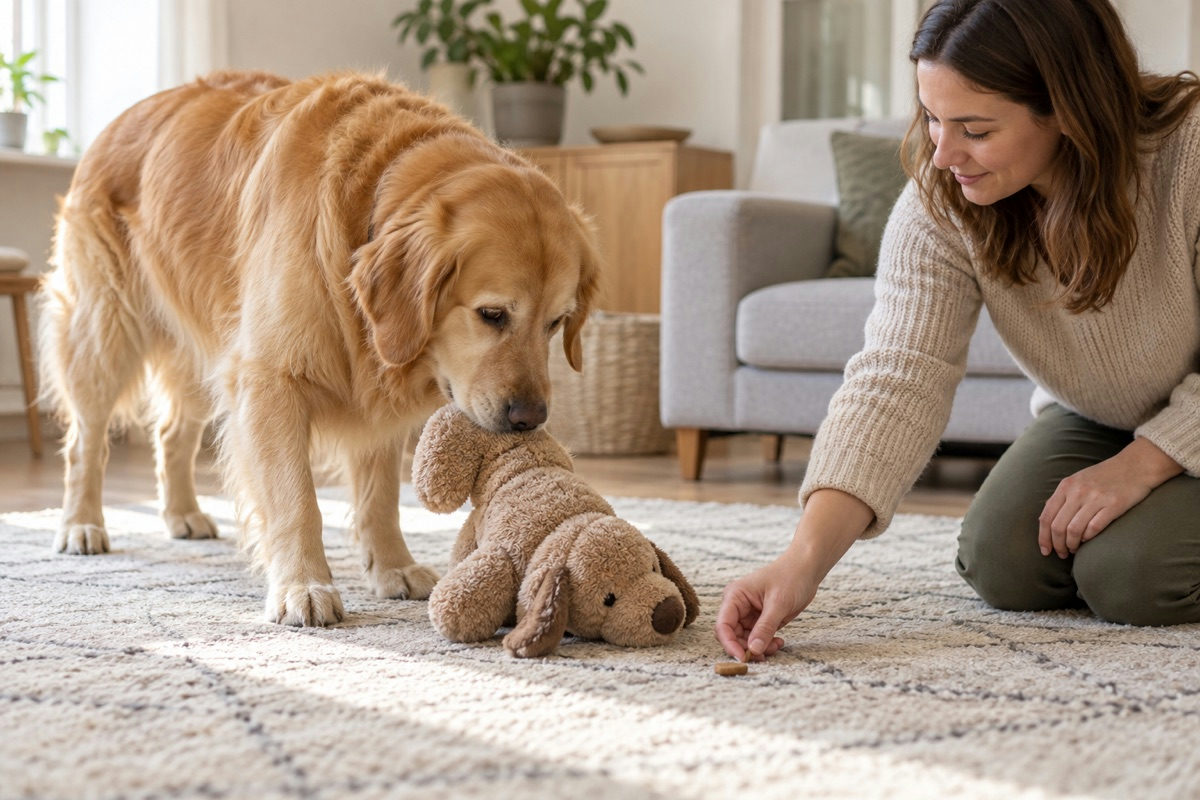
Offer the easy toy for a short, low-key interaction. Make the reward available in the planned position rather than trying to pry the toy out. When the dog releases and moves toward the reward, note that release. Keep your own approach to the toy calm. Avoid turning the moment into a sudden grab.
During practice, return the suitable toy as the linked charity guidance describes. Your own record can show how the exchange looked: the toy held, the reward offered, the release and the return. These are observable events. A note such as “gave it back well” omits the details another handler needs.
If the dog moves away with the toy, do not start a pursuit game. Pause and review the choice of object and room. You may need an easier item or professional guidance about the setup. A toy trade should not become a contest over who can move faster or reach the mouth first.
Add one release word to the familiar pattern
Choose a short cue such as “drop” or “out” and write it on the card. Ask household members to use the same word for the same action. Avoid using “leave” for some releases and “drop” for others while expecting a beginner to interpret the terms as interchangeable.
Add the word to the familiar voluntary exchange when you can recognise the action you are teaching. Do not repeat it through an entire game. If the dog keeps holding the toy, more repetitions of the sound are not a new explanation. Review whether the trade picture is still easy enough to understand.
Keep praise and the cue distinct. One person may say the cue, then provide calm feedback when the exchange happens. A stream of “drop, good, leave, come here” leaves no clear household version to reproduce. A short cue card protects the simplicity of the original task.
Change the toy without changing everything else
Once the current version is clear, consider a different suitable toy in the same room with the same handler. Record the new object. Keep the reward arrangement and your position familiar. A new toy is already a change; a new room, new handler and active visitor do not need to arrive with it.
Inspect the new toy and decide whether it is appropriate for this exercise. Do not use a dangerous item to test the cue. Training with chosen toys and handling a real emergency are different situations. If your dog may have swallowed something harmful, contact veterinary help rather than relying on a home practice routine.
For a different handler, return to the easier toy and the familiar room. Show the person your card first. Ask them to describe the sequence back to you so you can fix unclear instructions. This is a practical way to transfer the household routine without assuming the dog will fill in missing steps.
Keep leave training on a separate card
A drop exercise concerns an item already held. A leave exercise concerns not taking something in the first place. Write those definitions on separate pages. Their distinction is especially useful for retrievers whose toy games involve carrying objects, because a handler may otherwise ask for an action that does not match the situation.
Manage the room while either skill is developing. Put away items you do not want taken and supervise access appropriately. A cue is not a reason to leave hazards available. Your practice record should list the training object and the management step, such as closing the laundry door before bringing out the toy.
For a broader starting framework, read the site’s retriever training foundations. Keep this focused lesson separate from full retrieving games. You are practising a release and exchange, not asking for a distant retrieve, a delivery to hand and a sustained hold all at once.
Review the last exchange before the next session
Record the toy, room, handler, reward position and visible release. Add the next step as one action: repeat this toy, simplify the exchange or ask a trainer about an uncomfortable response. A Retriever Drop Cue becomes easier for the household to teach when the card describes what actually happened.
Finish by checking and storing the toy. Put your current instructions beside the supplies so the next person can find them. Your aim is a voluntary, understandable exchange with calm hands and an easy object, and that is the version worth bringing back to the next practice.