
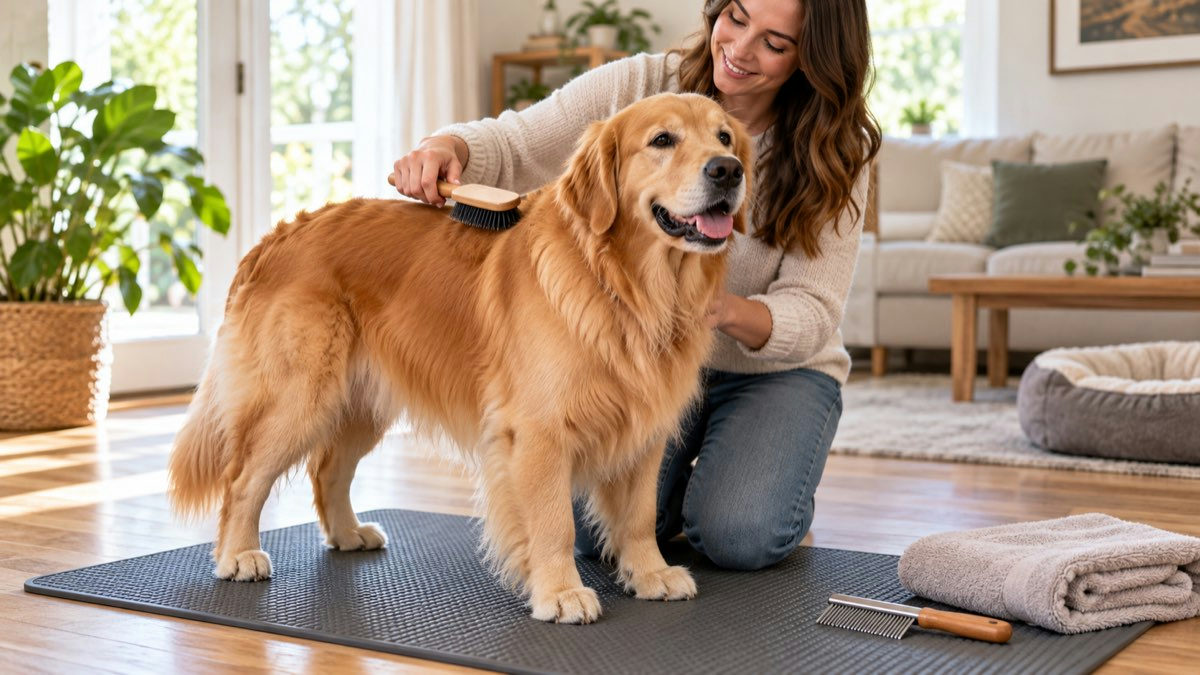
Grooming a retriever at home is a practical way to care for its coat and notice changes that may need a professional’s attention. Golden and Labrador Retrievers both shed, but their coats and tolerance for handling differ from dog to dog. This guide walks through the tools, a gentle brushing routine, bathing, and the points where a groomer or veterinarian should take over.
Disclosure: This article may contain affiliate links; Bumble B Productions may earn from qualifying purchases at no extra cost to you. This guide is general information, not veterinary advice. Ask your veterinarian or a qualified groomer about your dog’s individual needs.
What You Need Before You Start Grooming a Retriever at Home
Having the right tools makes grooming a retriever at home faster, more comfortable for your dog, and more effective at managing their double coat.
- Slicker brush — fine wire bristles remove loose fur and light tangles from the topcoat. Look for one with a cushioned pad so the bristles flex rather than scratch.
- Undercoat rake or de-shedding tool — reaches through the topcoat to remove dense, dead undercoat. The AKC recommends de-shedding tools designed for double-coated breeds.
- Metal wide-tooth comb — essential for working through feathering on Golden Retrievers (the longer fur on the chest, legs, and tail).
- Dog-formulated shampoo — choose a product your veterinarian or groomer considers suitable for your dog’s skin and follow its label. Ask before using a new product on irritated skin.
- Nail clippers or a nail grinder — choose a tool you can control; ask a groomer to demonstrate if your dog is anxious or you cannot see where to trim.
- Dog ear cleaner — a pH-balanced solution recommended by your veterinarian.
- Soft toothbrush and dog toothpaste — use a product made for dogs rather than human toothpaste, and ask your veterinarian for a suitable option.
- Non-slip mat — placing your dog on a non-slip surface reduces anxiety and prevents slipping injuries during grooming sessions.
Understanding the Retriever Double Coat
Retrievers carry a two-layer coat: a water-repellent outer topcoat and a dense, insulating undercoat. According to the AKC’s Golden Retriever breed standard, the outer coat is “firm and resilient, neither coarse nor silky,” while the undercoat provides warmth and buoyancy in water.
Labradors generally have a shorter coat than Goldens, while Golden feathering can collect tangles around the legs, tail, and ears. Shedding varies by individual dog and season. The useful response is to check the coat regularly and adjust brushing to what you actually find, rather than following a fixed calendar.
Do not shave a double coat simply to make grooming easier without discussing it with a veterinarian or experienced groomer. Brushing and careful removal of loose hair are more appropriate starting points for routine care. If mats are tight against the skin, ask a professional to remove them rather than pulling hard or cutting close to the skin at home.
How to Set a Brushing Routine for Each Breed
For a Labrador Retriever, begin with short, gentle sessions and use the amount of loose hair you find as a guide. Check whether the brush reaches the undercoat without scratching the skin. If your dog is shedding heavily, more frequent short sessions may be easier than an occasional long one.
For a Golden Retriever, give extra attention to feathered areas, behind the ears, under the legs, and where a collar rests. Use the metal comb after the brush to find tangles the brush missed. Increase or shorten sessions according to your dog’s coat and comfort; stop if the skin becomes irritated.
For routine detangling, work on a dry or mostly dry coat so you can see and feel the tangle. After swimming or rain, towel the dog and let the coat dry in a comfortable place. A dryer should be used only if the dog tolerates it and the air is not hot. Ask a groomer for help if a wet mat tightens close to the skin.
Step-by-Step Brushing Routine for Grooming a Retriever at Home
- Start at the head and work back. Begin behind the ears — a common tangle spot — then move to the neck, chest, body, legs, and tail. Working in sections ensures complete coverage.
- Use the slicker brush in short, overlapping strokes in the direction of hair growth. Lift small sections of fur and brush underneath to reach the undercoat.
- Follow with the undercoat rake if needed. Use light pressure, check the skin, and stop if the tool catches or the dog becomes uncomfortable. The aim is to lift loose hair, not to scrape or pull.
- Finish with the metal comb on Goldens: comb through the feathering on the legs, chest, and tail. If the comb catches, use your fingers to gently separate the mat before working the comb back through.
- Check for mats or changes in the skin as you go. If you find a new lump, sore, or painful area, ask your veterinarian rather than trying to identify it from appearance alone.
Bathing Your Retriever: When and How
Bathing frequency depends on the dog’s coat, activities, and any skin advice from its veterinarian. A muddy dog may need a bath sooner than a mostly indoor dog. Avoid imposing one fixed interval on every retriever, and ask a professional if the skin is dry, irritated, or unusually oily.
The ASPCA’s general dog care guidance recommends regular grooming and attention to individual needs. Use the dog’s actual condition and professional advice to choose a bathing routine.
Bathing steps:
- Brush thoroughly before the bath to remove loose fur and prevent wet tangles from tightening into mats.
- Wet the coat completely with lukewarm water. The double coat repels water, so take your time saturating the undercoat.
- Apply shampoo from neck to tail, working it into the coat with your fingertips. Avoid the eyes and ear canals.
- Rinse thoroughly — any leftover shampoo residue can irritate the skin. Rinse until the water runs completely clear.
- Apply conditioner if using one, leave for the instructed time, and rinse again.
- Towel-dry thoroughly, then allow the dog to finish drying in a comfortable place. If you use a dryer, keep it at a gentle setting and stop if the dog is distressed.
Nail Trimming
Check the nails regularly rather than relying on a calendar. VCA Animal Hospitals explains nail trimming and grooming and can help you recognize when nails need attention. If you are unsure how much to remove, ask a veterinarian or groomer to demonstrate on your dog.
The quick is the sensitive tissue inside the nail and can be difficult to judge, especially in dark nails. Work slowly, remove only a small amount if you know where to trim, and stop if your dog pulls away. A professional demonstration is the safest next step when the boundary is unclear.
If a nail bleeds or your dog appears painful, contact your veterinarian for advice on what to do next. Do not continue trimming a distressed dog to finish a schedule.
Ear Cleaning
Check the outer ears during normal grooming, especially after swimming. If you notice an unusual odor, discharge, redness, pain, or repeated head shaking, consult your veterinarian before using a cleaner. Routine ear care varies by dog, and cleaning too often or using the wrong product may cause problems.
If your veterinarian has shown you how to clean this dog’s ears, follow that product and technique. Otherwise, simply look at the visible outer ear and avoid inserting swabs or tools into the canal. Note any change and ask for guidance before treating it yourself.
Dental Care for Retrievers
Home toothbrushing can be part of a dog’s regular care. The AKC describes how to introduce a dog toothbrush and dog-safe toothpaste. Ask your veterinarian what routine is appropriate for your dog, especially if the mouth is painful or the gums bleed. Do not use human toothpaste.
Introduce the brush gradually: let your dog investigate it, practice a brief touch near the mouth, and reward calm cooperation. Increase only while the dog remains comfortable. Your veterinarian can recommend suitable dental products and tell you when a professional dental examination is needed.
When to See a Professional Groomer
Home grooming keeps the coat in good condition between visits, but a professional groomer adds value in several areas:
- Sanitary trims — trimming hair around the paws, ears, and hindquarters requires precise scissor work that most pet owners prefer to leave to a professional.
- De-shedding help — a groomer can work through a dense coat, demonstrate tools, and show you how to avoid scraping the skin.
- Breed-specific shaping — Golden Retrievers benefit from occasional scissoring of the feathering to maintain a tidy appearance and reduce matting.
Book professional grooming when the coat, nails, or your dog’s tolerance make home care difficult. Ask the groomer which tasks you can comfortably maintain between visits and which signs should go to a veterinarian.
Building a Routine Your Retriever Enjoys
The best grooming routine is one your dog cooperates with. Start handling paws, ears, and the mouth during puppyhood — even without tools — so your dog learns that handling is normal and comfortable. Pair every grooming session with calm praise and a small treat after each stage. Keep early sessions short and end on a positive note before the dog becomes impatient.
If your dog shows significant anxiety around grooming, consult a certified professional dog trainer or your veterinarian before pushing forward. Forced grooming can create lasting negative associations that make every future session harder.
Retriever Home Grooming Checklist
- ✓ Check the coat and brush gently as needed for loose hair and tangles
- ✓ Bathe according to coat condition and professional advice
- ✓ Check nails and seek a demonstration if trimming is uncertain
- ✓ Look at the outer ears and ask a vet about concerning changes
- ✓ Introduce dog-safe toothbrushing gradually
- ✓ Use a groomer when mats or handling become difficult
Grooming a retriever at home takes practice. Start with one easy task, add steps gradually, and let the dog’s comfort guide each session. A consistent, gentle routine gives you a chance to notice changes while leaving medical concerns to your veterinarian.